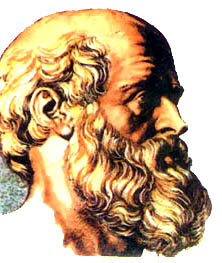
“If we could give every individual the right amount of nourishment
and exercise, not too little and not too much, we would have found the safest
way to health.”
Hippocrates around 400 B.C.
So, if we have known of the miracle path to health
for 2400 years or more, why are so many of us still getting sick as a direct
result of the lives we choose to lead. How could we have had this answer for
all this time and still we have the problem? Maybe it is because many people,
secretly (or not so secretly), do not want to change. Although this is
certainly true of some people, the condition does not have to be permanent.
This blog post is dedicated to helping you recognize when your loved one is
ready to change and help you be ready to help.
This issue of people not wanting to change has
been the subject of intense study. In the early 1980s, Drs Prochaska &
DiClemente at the University
of Rhode Island
To a casual observer, it looks as if the
bucket began to overflow at the moment that last drop rolled over the edge of
the bucket. In a very real sense though, it began to overflow from the moment
the first drop hit the bottom of the empty bucket. As scientists, Dr.’s Prochaska &
DiClemente were no casual observers. Through extensive study, they identified 5
distinct stages of change. They consolidated their work into a method of
understanding how human beings can change and how we professionals can help them
to do it. This method, called the Transtheoretical Model of Change, is based on
the concept that people will only be able to make the changes that they are
truly ready to make. By understanding how each particular behavior scores on a
readiness to change scale, you can begin to attack those behaviors that are
ripe for change while cultivating others for later harvest.
How R*E*A*D*Y are they?
Based on the Transtheoretical model, I
have developed the R*E*A*D*Y acronym. This is a helpful way to determine how willing
your loved one is to change. When my clients and I consider a behavior for
change, I ask them to take an honest look at the behavior; the more honest the
look, the more useful the test. In your case, this means that you need to be a conscious observer. Watch what your loved one is doing and what they say. When you understand how the behavior scores, you can determine
how enthusiastically you approach them about making the change. This is
important because when you focus only on behaviors that they can really change,
you will not only be using your energy wisely but you will also build trust.
Your loved one needs to know you are in this for them. By meeting them where
they are ready, you are giving them an opportunity to really feel understood.
By properly grading the behaviors, we can guarantee success and use that
success always breeds more success.
Each
letter of R*E*A*D*Y represents a specific stage of readiness and is described
below.
R – REFUSE - This is actually not a stage of readiness at all, it’s a stage of unreadiness. In this stage we refuse to believe we have a problem. We absolutely fail to recognize that there is anything wrong. It is the ultimate expression of blissful ignorance. It is this stage where the internal excuse operating system is working overtime. I’ll never forget the time my wife, concerned about my weight, served me a no fat, no salt soup. I ate it and said “I would rather die than eat this stuff the rest of my life”. The sad part was I meant it at the time; I was not ready to change. I did not even want to talk about it. Maybe I was ready to change something but I was not ready to change that behavior.
R – REFUSE - This is actually not a stage of readiness at all, it’s a stage of unreadiness. In this stage we refuse to believe we have a problem. We absolutely fail to recognize that there is anything wrong. It is the ultimate expression of blissful ignorance. It is this stage where the internal excuse operating system is working overtime. I’ll never forget the time my wife, concerned about my weight, served me a no fat, no salt soup. I ate it and said “I would rather die than eat this stuff the rest of my life”. The sad part was I meant it at the time; I was not ready to change. I did not even want to talk about it. Maybe I was ready to change something but I was not ready to change that behavior.
It
is important to understand that your loved one may be at different stages of
readiness for every single behavior that they need to change. Many of the behaviors that need to be changed,
may not even make their list of bad habits! They are in a hidden subconscious bank
account of bad habits and their mind refuses to let them be seen. The best way
to deal with changing behaviors is to be patient. Move on to other things you
know need to be changed. They may not seem as important but, that doesn’t
matter. If they are in this stage, pushing the issue is like setting of the
detonator on a bomb! It is your job to look for other behaviors that might be
in the E, A or D category.
E- EXPLORE: This is where they begin to think about the
behaviors they want to change. It’s
where they start to recognize that there’s a problem. It is here that they begin to at least
consider that behaviors are not doing them any good. In this stage they are
just waking up to the fact that these behaviors are worth changing. It is through this exploration that they can
begin to make change possible. This exploration, however, takes place entirely
in the mind. It is a time of contemplation.
The
best thing for you to do at this stage is to have conversations about the
change. Talk openly about what good it will bring. Talk about how you can help
remove some barriers to make the change happen. Talk about how you support
them. Don’t push them to action in this phase. It’s too early. Things don’t
physically “happen” in this stage. To make things happen they need to acquire
all the knowledge and tools necessary to begin work.
A- AQUIRE During this stage they begin to acquire
what they need to make their changes work.
The acquisitions that they make include knowledge, equipment, motivation
and mind set. If they are reading a one of my “Lose Weight for Good!” blog
posts or are listening to my audio program, they are acquiring knowledge. They have passed through the exploration
stage. They considered their problem and have decided to set the wheels of
change in motion. Their acquisition of knowledge is going to form the basis of their
future actions. In addition to acquiring knowledge, they may also buy a piece
of exercise equipment, join a health club or take a cooking course. This is
where they begin to get things started.
Sometimes it is just acquiring the basics of a habit. When I wanted to
start walking every night, I started by just walking out onto my front porch. I
opened the door and stood there like an idiot. After a while, I felt so stupid
that I just started walking. On the days I did not want to walk, I still opened
the door and stood there. It took almost no effort to open the door and it was
hard to find an excuse not to do it. I wonder if my neighbors still think I’m
crazy? I was working to acquire the habit of walking. Even on the nights I did
not walk, I worked on building the habit. At this stage, building the habit ensures
future action. Their commitment to this stage will determine their ability to
follow through. You can help by
encouraging them. You can also simply acknowledge that you see what they are
doing as a VERY positive step in the right direction. In this stage, you can
gently nudge them to do the very thing they are exploring. Maybe you do it with
them. Maybe you actually remove barriers that allow them to get started. When a
father agrees to take the kids to the park so mom can go to the gym, it is a
bit. Which leads us to the next stage . . . Doing!
D-Doing: Like in the scene from “Forrest Gump” where he just gets up and runs. This is the point where we just start doing it. This is the point of action; it is where the work gets done. This is where behaviors begin to change. It is where “the rubber meets the road.” Experts say it takes about 30 days to change a behavior. If your loved one can stay in action phase for at least 30 days then they will probably successfully change that behavior. Of course I always thought good behaviors took a little longer and it seems bad behaviors can develop in an instant. Once they are doing the behavior regularly it seems automatic, it becomes part of their new operating system. It becomes part of their definition of themselves. Their “YOU”, so to speak. Welcome to the YOU phase.
D-Doing: Like in the scene from “Forrest Gump” where he just gets up and runs. This is the point where we just start doing it. This is the point of action; it is where the work gets done. This is where behaviors begin to change. It is where “the rubber meets the road.” Experts say it takes about 30 days to change a behavior. If your loved one can stay in action phase for at least 30 days then they will probably successfully change that behavior. Of course I always thought good behaviors took a little longer and it seems bad behaviors can develop in an instant. Once they are doing the behavior regularly it seems automatic, it becomes part of their new operating system. It becomes part of their definition of themselves. Their “YOU”, so to speak. Welcome to the YOU phase.
Y – YOU –This is the phase
where they can’t imagine a world without this new behavior. It is so much a
part of them, they can barley even remember life before this change. The
behavior becomes almost effortless. It is automatic because it has become
organic to their mind. It is now part of their operating system. When this
behavior is part of them it is hard to deny and hard to defy. If it is part of their definition of themselves,
it is an easy behavior for you to maintain.
It belongs to them; it is them.
It is the last stage of the behavior change process-- sort of.
Watch out for the back slide.
Change is part of being human. Human
beings are constantly changing and evolving. It is this quality that assures we
humans have the power to change our behavior. Although some behaviors are
easier to change than others, all behaviors can change. The bad news is that
any behavior that that can be changed can also change back. Even after they
achieve the “you” phase for a given behavior, it is possible for them to slide
back to an earlier stage on the ready scale. You could, for instance, notice
that what seemed like a 1 week break in their regular exercise routine has
lasted over a month. For a year they exercised faithfully and now they just
don’t. At this point they are no longer in the YOU phase of this behavior. The
really bad news is that they don’t even qualify for the Do-it phase anymore. The
best thing to do here is to be open and have a conversation. Begin with an
acknowledgement that you are really proud of them for the changes they have
made. Then note that you were really impressed that they were exercising. Then
observe that they haven’t been doing it much lately. No judgment, just
observation. Then progress the conversation to why this is no longer part of
their life. Maybe you will even see a way you can help. Be careful not to “solve”
the problem for them. Do more asking of questions then telling. Try to help
them discover their own solutions.

No comments:
Post a Comment