Sunday, January 13, 2013

How to approach a difficult topic with your spouse.

By Karen Matz, LMSW
When couples disagree, argue, fight or just don’t see eye to eye, it can be rather uncomfortable for the pair.  This can be the case whether they are talking about household chores, finances, child rearing or even weight loss. The topic of the conversation doesn’t matter as much as how the couple chooses to END the conversation.  

There are lots of times that Russ and I find ourselves in rather “challenging” conversations.  I choose the word challenging over fighting because we don’t typically argue. Besides, we really do look at these opportunities as challenges. This isn’t to say we don’t disagree from time to time but we always work to end the discussion well. One way we do that is by asking each other if we are complete on the topic, meaning; did we get to say and express everything we wanted to.  I find that it is during these most challenging moments that our relationship grows most, as a couple and as individuals.     

Why is that? It’s because when we step outside of our comfort zone, and move away from what is comfortable, we learn most about ourselves. If we are really honest with ourselves we can learn what we are really capable of, what we really think of ourselves and of our relationships with others. These conversations are literally like puzzles for us to solve and the payoff is that we have a deeper understanding of each other and our combined capabilities. This is, however, potentially dangerous territory and for this to work, the game has to have rules.

On January 1, 2013 I found myself in one of these types of conversations with Russ.  We were at our favorite restaurant in Manhattan having lunch before Russ was to give a lecture.  I cannot recall specifically how the topic came up but the main subject of the conversation was that Russ was not feeling as if I was passionate about our new ventures for the Betterness Institute® namely, Lose Weight for Good® and I Love You to Health.  

I knew how tense the conversation must have looked by the body language of our waitress.    She cautiously approached our table to ask if there was anything else we wanted. When we replied with a polite "no thank you, just the check" she very quickly scurried away.  She came back several minutes later with the check, from the furthest position possible, she dropped the check on the table and turned away. While at first, I thought it might have been me, I realized that it was our conversation that was making her uncomfortable. As a social worker, I get a chance to see how a lot of people react to uncomfortable conversations.

The topic was tense, thought provoking, emotional and yet passionate.  Russ was challenging my commitment to him and to the business.  I had to reach deep within myself to see really what my feelings were specifically about Lose Weight for Good.  I had to step out the comfort of what I knew to be familiar, reexamine what I really felt passion about and even redefine my passions.  I didn’t say change what I am passionate about but redefine it.  

We concluded this uncomfortable topic with aligning what we both wanted to see as the goals for future.  Even though it looks like I have a different passion than Russ, we are united by a common mission. Russ helped me to see that in order to achieve our mission we need to achieve other goals first.  I got it, I finally got it!  But if we hadn’t had this challenging conversation, he would still be feeling like I wasn’t supporting him and I would have still being thinking “I am not passionate about this.”  

So how can all this apply to helping couples become healthier together? I often think about the many conversations I tried to have with my ex-husband about his weight and how it was dramatically affecting his health and ultimately our relationship.  As a matter of fact, it is how I got reacquainted with Russ.  I was reaching out to Russ to ask what advice he could give me to help my husband.  I was usually afraid to have those difficult conversations with my ex.  I didn’t want to be uncomfortable, I didn’t want to make him uncomfortable but yet I was sitting back watching him kill himself and kill our marriage.  One of the big differences in my relationship with Russ is that he approaches conversations differently from my ex so I am able to have these challenging conversations and feel safe.  If you want to have that type of conversation with someone you love how should you go about it?  Some basic rules in any conversation would be to:

  1. Identify the problem
  2. Focus on the problem and the end results (what goal do you want to achieve)
  3. Attack the problem not the person
  4. LISTEN with an open mind and open heart!
  5. Treat the person’s feelings with respect
  6. Talk in “I” statements.  Using “you” statements puts up walls and can make the other person defensive.

In my work as a social worker, when I have had a spouse talk with me about their concerns for their partner, what I often hear is how frustrated they are because they are more passionate about their partner’s health than the partner themselves.  

In giving this some thought, I realized that my conversation this past week with Russ was no different.  I am by no means saying that we can or will get your partner to become passionate about something they do not feel, but I am suggesting that maybe you can find a common goal that give them the passion for a desired out come.  Let’s say for example, you are both 50-something, and are looking forward to retirement and traveling.  How would retirement look if you both were healthy to travel to any destination? And how would it look if you were to keep up the same un-healthy lifestyle?  

Even though your partner may want to believe he/she is “fine” they way they are today, maybe they can start to see how maybe being a little more fit will make a difference in the life you plan to have together.   

Now you have a choice, sit back and stay comfortable with the status quo (and accept that NOTHING will change) or have that possible uncomfortable conversation coming from a place of love. If you do the latter, you WILL grow as a couple.  I learned a long time ago from my parents that if you don't ask, it is an automatic "no".  If you don't have important conversations with your partner, you will never know how each other feels or what you are each thinking. When you stay oblivious to those important things, you never have the opportunity to make a difference in both your lives! So, have the tough conversations but, before you do, lay down the rules to the game.  

Monday, November 26, 2012

Take That You Vegan Freak!


By Karen Matz, LMSW
Recently, I was having a conversation with a dear friend, when she said something that hit me hard.  She said When someone is pushing me to eat healthier, I find myself eating at them.  She continued, I will purposely go out and eat something I know I shouldnt just to prove I can and they cant stop me.  
WHOA!  I realized at that very moment that is what I do to Russ.  Sometimes, when he is not around, I eat AT him!  I hear his words all the time echoing in my head as a go to the deli for lunch, Your body will thank you.  You are a role model to all those who watch you.  blah, blah, blah . . . phht. Sometimes the echoes are enough to help me make healthier choices, veggie burger over a beef burger; side salad instead of fries; apple instead of a cookie.  
But then there are those times that I dont want to be role model, I dont want the pressure to feel perfect.  I want that burger that drips down my arm, the fries that are greasy with a firm crisp, so I get it and eat it all the while thinking you cant tell me what to eat, I can eat whatever I want, I never asked to be the worlds role model.  I think of all the excuses as to why I can have it, why I should have and how I deserve it!  It's as if I toast my decadence with "Take that you vegan freak, that oughta teach ya!" Then, I bite down hard and chew in defiance! Oh, if he only knew. 
After I am done convincing myself of all the reasons why it is ok and I am done eating at Russ, I sit back and then have to ask myself was it worth it? The answer is always No.  Not only because it usually makes me feel a little sick but also because I know deep within me that I am the one to pay the consequences in the long-term.  I am going to have to bike longer or not get to take that day off I was planning or face the consequences on the scale or in my jeans as they get tighter. 
After my friend used that term eat at them I decided to take a hard look at myself, my conscious mind and come face to face with it.  When people look at me, they may not think I have food issues but, I do. I worry, and sometimes obsess, about what I should and should not eat, how many calories, how much fat, on and on. Of course, Russ is always trying to get me to focus on the healthy benefits of good, wholesome food. What does he know about being me? When I heard that term, I eat at them; it put into words the way I feel when I want to use food as a way of showing that I, not anyone else, is in control of my life. 
When I explained all this to Russ, I thought he would be mad at me or disappointed but he was loving and understanding.  We talked about some reasons why I do this rather odd behavior. He said he was not aware that he was my personal food police and asked if he could change what he said or did to take some of the pressure off. I know its not him. I already know I dont need to feel guilty for eating a burger, sometimes it's ok.  
For me, I look up to Russ for the life changes he made.  I want to be more like him.  I want to be more active, be healthier and be an inspiration.  I encourage you to find that one person in your life who inspires you to be more healthy and more active.  You dont need to feel guilty for the food choices you make but know the consequences. Be honest with yourself if you find yourself eating at someone and ask yourself why?  Then talk with that person, they just may not know how they are affecting you.  Who knows, they may even have the words of encouragement that you need!  

Wednesday, November 7, 2012

For Better Together or For Worse Together . . .

By Karen Matz, LMSW
For 12 years I was married to a man who gained 100 pounds since the time we started dating.  He not only was considered morbidly obese but was also Type II diabetic, insulin dependent, had high blood pressure and a family history of heart disease.

I worried everyday about his health.  When he didn't “feel well” I silently panicked “was this a heart attack?” He already had two life threatening, weight related health scares before age 40, so this “burden” I carried was real!   The fluctuating of his blood sugar levels caused irritability and moodiness so I never knew what to expect when he walked through the front door. 

I feel like I tried everything to get him to lose weight, exercise or just eat healthier.  My efforts ranged from fighting with him, ignoring the situation, threatening him, reminding him how his unhealthy habit were killing him and how his death would impact me and the children.  I even took a positive approach and started to role model a healthier habits hoping he would join in.  I lost nearly 30 pounds and due to what appeared to be pure stubbornness he gained even more weight.  Finally, I realized that his health habits didn't need to smother or kill me. Our lifestyle as a couple was flat and bland. We spent our together time eating, sleeping and watching TV. I realized that his life, our life, didn't need to stop me from doing the things I enjoyed doing. I realized that "Our Life" didn't need to define who I was any longer.  Not surprisingly  his lifestyle issues lead to the destruction to our marriage. Notice, I said "lifestyle" issues, not weight. What looked like a weight problem was actually a life compatibility problem. 

Why am I telling you all this?  Well for the first time I am beginning to understand a little bit of his perspective.  When I was married to this man all I wanted was someone who ate healthy, exercised, loved the outdoors, was adventurous and not a couch potato who only watched the Food Network 24/7.  As the old saying goes, “be careful of what you wish for” because I got all of that and more in Russ.  He is everything I dreamed of! In the two years we are together I have done more adventurous things then I thought possible.
 
So how is it that I understand my ex’s frustration of my constant concern for his health?  Because now the shoe is on the other foot.  Not that Russ nags me or pushes me on any one direction.  What he does do is help me when I express that I want to be healthier or get in better shape.  He is right there to support me, even in those moment when I don’t want the support.  When two, three or four days go by and I haven’t gotten on my bike, he might say something like “Are you going riding today?”  If I give him an excuse as to why I won’t be riding he will lovingly challenge me.  Nine times out of ten I would begrudgingly get on the bike and by the end of the ride I was glad that I did it.  As a matter of fact, I cannot think of a time that I have ever regretted getting on my bike.  The big difference between me and my ex is I am willing to get my butt on the bike where he would remain steadfast in stubbornness just to prove to me that he is in control.  I feel that I am willing to be open-minded to change.  I choose not to be confrontational but open to hear what Russ has to offer and give it a try.

This past week Russ and I were is Los Angeles, California.  We decided that we would take a long hike from the Griffith Observatory to the back of the famous Hollywood sign.  This, what I thought would be a 5 mile hike, was going to be our exercise for that day.  It turned out to be an 8 ½ mile mountain hike.  Russ doesn't take the easy road; he decides to take the road less traveled.  At first I complained and whined (thinking it might stop him) but when he literally ran ahead. I decided in a split moment that:

a) I didn't want to get separated from him.
b) I didn't want MY limiting beliefs to stop me from experiencing something with Russ.
c) How was I going to grow if I remained in my comfort zone? and 
d) How was I going to inspire other people if I took the easy route? 


In a split second decision, I followed Russ up the trail and headed for an amazing adventure!  Don’t get me wrong, I cursed him under my breath and there were moments when I wanted to cry, stop and throw a temper tantrum right there on the trail but I pushed through it.  I pushed through the body pains, the heat, and the limiting belief that “I can’t do this” knowing that Russ was there to support me and celebrate with me at the end of the 5 hour hike!!  If I allowed my limiting beliefs to stop me I would have missed some beautiful views from the top of the mountains. And I would have missed the moment when we stopped for a rest and Russ held me close as we sat in awe of nature’s beauty.  I realized at the end of this hike that Russ’ pushing and encouragement wasn't in service to him but in service to me.  He helped me to see that I am capable of doing more then I allow myself to believe.   When I allow myself to be open minded and not in control, I can accomplish so much more!

2 miles into the hike. The Little White Speck On The Distant Mountain is the Hollywood Sign. That was our destination! PS, we did not take the clear path. We hiked up and OVER the peaks!  
My point is that when you are trying to motivate someone you love to be healthier put his or her shoe on your foot and see how it feels.  Walk the walk with them, in-service to them!  Lovingly guide them outside their comfort zone with their permission.  And if you are the person who need to healthier, allow your partner the freedom to gently challenge you to step outside your comfort zone!  This is when the magic happens!!  Let life get bigger as you experience more TOGETHER as team!  


Saturday, September 1, 2012

Good Support Will Help You Grow!

by Karen Matz
A few weeks ago Russ and I went on 20-mile bike ride.  While we were riding, Russ said, “Karen, can I ask you a question?” Believe it or not he is able to hold a conversation riding a bike.  He went on to ask, “So are you ready to really step outside your comfort zone?” Now when Russ asks a question like this, it is his polite way of asking you to do something outrageous.  My immediate thought was “Oh good God what is going to ask me to do?  Jump out of plane, climb a rocky mountain, deep sea dive with sharks?”  I gulped and with hesitation said “Sure?”
He replied, “I want you to start writing a weekly blog posts.”  “What a relief”, I thought, “that’s it?  Really?  No risking my life?  Yeah, I can do that!!!”  A few moments passed as I started to process what he just asked of me.  “Wait? What is it you want me to do?  Write a what? Me? Write? No, I can’t do that!  Are you sure you don’t want me to jump out of a plane, swim with the sharks? I might be more comfortable with the sharks.” 
You see, I have a lot of self doubt when it comes to things that this.  When I was growing up I struggled in school, failing English 3 times!  It wasn’t until college that it was discovered that I had learning disabilities.  I labeled myself as not being smart, not capable of writing, not a good test taker, etc.  As turns out, these thoughts were my limiting beliefs.  They were only true because I made them true. I allowed them to be true. Once I started to discover what I COULD do, a whole new world opened up to me! 
So when Russ asked me to write this blog, I was surprised when a lot of those limiting beliefs came back in a flash!  When he sensed my terror, we talked about what my fears were, what was really going on deep down.  Deep down, I am afraid of being judged by others and disappointing myself! After a few tears and a long conversation, Russ helped me to come to the conclusion that by sharing these thoughts with other people, it might inspire them. They might realize that when it comes to feeling fear and self doubt, they’re not alone.  Whether you are on a journey of weight loss, financial freedom or healthier lifestyle, your journey starts within.  Fear and self doubt are actually pretty common. A lot of people have ‘em. What I have found works best is to be honest with yourself about how some of your beliefs are limiting you. Then prove to yourself the falsity of those beliefs by stepping outside your comfort zone. When you do, you’ll begin to overcome what’s holding you back.  Is it scary and uncomfortable?  Heck yeah! If you feel safe where you are right now, then you are not growing to be a better you.  That is why I have committed to writing this blog post! Pushing out of this comfort zone is going to help me to push out in other places in my life as well. Writing this is going to help me develop the habit of personal growth.  
 I am fortunate to have a partner like Russ, to help talk me though uncomfortable moments and to hold my hand as I step outside my comfort zone. He cheers me on during my successes and encourages me when I have self doubt.  Having someone to support you, whether a spouse, friend, cousin, co-worker will make your journey more successful! 

Thursday, August 2, 2012

Sometimes a walk is more than just a walk


I talk a lot about walking. It not only is a great exercise but it is an incredible way to improve your overall well being. As you may already be aware, stress is a huge contributor to being over weight. A simple walk is often enough for me to clear my head and prepare me to better deal with the stresses of my life. Do I have stresses? Just a few. The difference is how I handle them. When I walk, kayak, rock climb or engage in any other of my various actions, I meditate. It allows me time to first calm my mind which prepares me to better anticipate and work out the problems of my day and, ultimately my life. I feel better both physically and mentally. Moving the body has long been a prescription to fight depression. For me, it is a prescription for success as well.

Walking can also be healing to relationships. For instance, you may not know this but teenagers can be difficult. I have two. Are they difficult? Sometimes. Although they are nearly adults now, when they were younger, we had some rough moments. No matter how unsettled things became with them and no matter how angry we got at each other, we made it a point to take our family walk. When we got back, the problems seemed to be less. This simple walk allowed us the time to consider each other’s point of view. Those walks always lead to healing and understanding. I believe that we became better parents and our children have been able to accomplish more because of some simple strolls. 
Whether you are looking to be a better parent or a better life partner. One of the best things you can do for your relationship is to get off the couch, go outside and take a walk. As it turns out, while moving your body is important to mental and physical wellbeing, doing out of doors brings even more impact to the activity. To learn even more about the healing effects of being outside, check out my Long Island Paddle Blog Post: 

"Regular exercise in natural environments improves both physical and mental health." 


Sunday, July 15, 2012

Are the ready for your help?


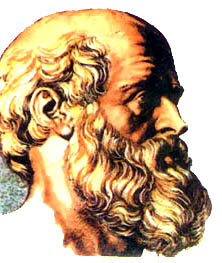
“If we could give every individual the right amount of nourishment and exercise, not too little and not too much, we would have found the safest way to health.
Hippocrates around 400 B.C.


So, if we have known of the miracle path to health for 2400 years or more, why are so many of us still getting sick as a direct result of the lives we choose to lead. How could we have had this answer for all this time and still we have the problem? Maybe it is because many people, secretly (or not so secretly), do not want to change. Although this is certainly true of some people, the condition does not have to be permanent. This blog post is dedicated to helping you recognize when your loved one is ready to change and help you be ready to help.

This issue of people not wanting to change has been the subject of intense study. In the early 1980s, Drs Prochaska & DiClemente at the University of Rhode Island examined the phenomenon of this apparent resistance to change as part of their work to help lower cancer rates. What they observed was that behavior change was not, as previously thought, a singular event but a process that occurred over time. In other words, they found that people did not just quit smoking all at once although it may appear as if they had. To arrive at the moment of quitting, they actually had to go through a series of thought processes or stages leading up to the moment where they no longer smoked. Like drops in a bucket, these thoughts and actions accumulated until the bucket was full. Once the bucket was filled, the very next drop made it over flow.
        To a casual observer, it looks as if the bucket began to overflow at the moment that last drop rolled over the edge of the bucket. In a very real sense though, it began to overflow from the moment the first drop hit the bottom of the empty bucket.  As scientists, Dr.’s Prochaska & DiClemente were no casual observers. Through extensive study, they identified 5 distinct stages of change. They consolidated their work into a method of understanding how human beings can change and how we professionals can help them to do it. This method, called the Transtheoretical Model of Change, is based on the concept that people will only be able to make the changes that they are truly ready to make. By understanding how each particular behavior scores on a readiness to change scale, you can begin to attack those behaviors that are ripe for change while cultivating others for later harvest.

How R*E*A*D*Y are they?

        Based on the Transtheoretical model, I have developed the R*E*A*D*Y acronym. This is a helpful way to determine how willing your loved one is to change. When my clients and I consider a behavior for change, I ask them to take an honest look at the behavior; the more honest the look, the more useful the test. In your case, this means that you need to be a conscious observer. Watch what your loved one is doing and what they say. When you understand how the behavior scores, you can determine how enthusiastically you approach them about making the change. This is important because when you focus only on behaviors that they can really change, you will not only be using your energy wisely but you will also build trust. Your loved one needs to know you are in this for them. By meeting them where they are ready, you are giving them an opportunity to really feel understood. By properly grading the behaviors, we can guarantee success and use that success always breeds more success.
Each letter of R*E*A*D*Y represents a specific stage of readiness and is described below.


R – REFUSE - This is actually not a stage of readiness at all, it’s a stage of unreadiness.  In this stage we refuse to believe we have a problem.  We absolutely fail to recognize that there is anything wrong.  It is the ultimate expression of blissful ignorance.  It is this stage where the internal excuse operating system is working overtime.  I’ll never forget the time my wife, concerned about my weight, served me a no fat, no salt soup.  I ate it and said “I would rather die than eat this stuff the rest of my life”.  The sad part was I meant it at the time; I was not ready to change. I did not even want to talk about it.  Maybe I was ready to change something but I was not ready to change that behavior. 
It is important to understand that your loved one may be at different stages of readiness for every single behavior that they need to change.  Many of the behaviors that need to be changed, may not even make their  list of bad habits!  They are in a hidden subconscious bank account of bad habits and their mind refuses to let them be seen. The best way to deal with changing behaviors is to be patient. Move on to other things you know need to be changed. They may not seem as important but, that doesn’t matter. If they are in this stage, pushing the issue is like setting of the detonator on a bomb! It is your job to look for other behaviors that might be in the E, A or D category.
E- EXPLORE:  This is where they begin to think about the behaviors they want to change.  It’s where they start to recognize that there’s a problem.  It is here that they begin to at least consider that behaviors are not doing them any good. In this stage they are just waking up to the fact that these behaviors are worth changing.  It is through this exploration that they can begin to make change possible. This exploration, however, takes place entirely in the mind. It is a time of contemplation.
The best thing for you to do at this stage is to have conversations about the change. Talk openly about what good it will bring. Talk about how you can help remove some barriers to make the change happen. Talk about how you support them. Don’t push them to action in this phase. It’s too early. Things don’t physically “happen” in this stage. To make things happen they need to acquire all the knowledge and tools necessary to begin work.
A- AQUIRE    During this stage they begin to acquire what they need to make their changes work.  The acquisitions that they make include knowledge, equipment, motivation and mind set. If they are reading a one of my “Lose Weight for Good!” blog posts or are listening to my audio program, they are acquiring knowledge.  They have passed through the exploration stage. They considered their problem and have decided to set the wheels of change in motion. Their acquisition of knowledge is going to form the basis of their future actions. In addition to acquiring knowledge, they may also buy a piece of exercise equipment, join a health club or take a cooking course. This is where they begin to get things started.  Sometimes it is just acquiring the basics of a habit. When I wanted to start walking every night, I started by just walking out onto my front porch. I opened the door and stood there like an idiot. After a while, I felt so stupid that I just started walking. On the days I did not want to walk, I still opened the door and stood there. It took almost no effort to open the door and it was hard to find an excuse not to do it. I wonder if my neighbors still think I’m crazy? I was working to acquire the habit of walking. Even on the nights I did not walk, I worked on building the habit. At this stage, building the habit ensures future action. Their commitment to this stage will determine their ability to follow through.  You can help by encouraging them. You can also simply acknowledge that you see what they are doing as a VERY positive step in the right direction. In this stage, you can gently nudge them to do the very thing they are exploring. Maybe you do it with them. Maybe you actually remove barriers that allow them to get started. When a father agrees to take the kids to the park so mom can go to the gym, it is a bit. Which leads us to the next stage . . . Doing!
D-Doing: Like in the scene from “Forrest Gump” where he just gets up and runs.  This is the point where we just start doing it.  This is the point of action; it is where the work gets done.  This is where behaviors begin to change. It is where “the rubber meets the road.”   Experts say it takes about 30 days to change a behavior.  If your loved one can stay in action phase for at least 30 days then they will probably successfully change that behavior.  Of course I always thought good behaviors took a little longer and it seems bad behaviors can develop in an instant. Once they are doing the behavior regularly it seems automatic, it becomes part of their new operating system. It becomes part of their definition of themselves. Their “YOU”, so to speak. Welcome to the YOU phase.
Y – YOU –This is the phase where they can’t imagine a world without this new behavior. It is so much a part of them, they can barley even remember life before this change. The behavior becomes almost effortless. It is automatic because it has become organic to their mind. It is now part of their operating system. When this behavior is part of them it is hard to deny and hard to defy.  If it is part of their definition of themselves, it is an easy behavior for you to maintain.  It belongs to them;  it is them. It is the last stage of the behavior change process-- sort of.

Watch out for the back slide.

        Change is part of being human. Human beings are constantly changing and evolving. It is this quality that assures we humans have the power to change our behavior. Although some behaviors are easier to change than others, all behaviors can change. The bad news is that any behavior that that can be changed can also change back. Even after they achieve the “you” phase for a given behavior, it is possible for them to slide back to an earlier stage on the ready scale. You could, for instance, notice that what seemed like a 1 week break in their regular exercise routine has lasted over a month. For a year they exercised faithfully and now they just don’t. At this point they are no longer in the YOU phase of this behavior. The really bad news is that they don’t even qualify for the Do-it phase anymore. The best thing to do here is to be open and have a conversation. Begin with an acknowledgement that you are really proud of them for the changes they have made. Then note that you were really impressed that they were exercising. Then observe that they haven’t been doing it much lately. No judgment, just observation. Then progress the conversation to why this is no longer part of their life. Maybe you will even see a way you can help. Be careful not to “solve” the problem for them. Do more asking of questions then telling. Try to help them discover their own solutions. 

Sunday, July 8, 2012

8 Ways to Help Your Spouse Lose Weight

From (http://www.hitchedmag.com/article.php?id=439)
Get your spouse into shape without upsetting them with these eight tips.

BigStockPhoto 
Be a lifesaver for your partner and follow these eight tips.


Do you live with an overweight partner? Nearly two-thirds of Americans do, and it can be challenging on several levels. You want to try and change him or her—especially because excess weight puts your loved one at risk for heart disease, diabetes and stroke. But I've found from personal experience that nagging and criticizing doesn’t work. It's more effective to let your partner know that you love and support him or her, and that you hope for a long, healthy, adventure-filled life together. Here are eight secrets to help an overweight partner adopt a healthier lifestyle.

1. Change what's in your kitchen. Get rid of temptations. Fill up the fridge with ready-to-eat fresh fruit—apples, strawberries, red grapes, pineapple chunks and clementines are good choices. Popcorn is great for mindless TV munching. Low-cal frozen dinners are a must for emergencies.

2. Take walks together. No need to join a gym or buy a set of weights. Invite your partner for a sunset walk around the neighborhood. It's great for the heart—and your relationship.

3. Convert favorite dishes into healthier versions. Make sure you still have favorite meals—only healthier versions of them. If you're not the chief cook and bottle washer in the house, tell your spouse you want to help. Steam, bake or broil instead of fry. Use nonfat chicken broth to cook with instead of butter. For every unhealthy ingredient, substitute a healthier one.

4. Eat out less. When changing eating habits, it's easier to control portions and ingredients when you prepare the food yourself. Cook at home, and encourage your partner to take healthy food from home to have for lunch and snacks during work.

5. Give him or her positive affirmation. Once a day, make your spouse feel valued. A small gesture such as a spontaneous kiss or a squeeze of the hand acts as an enormous psychological boost, and sends your partner the message they are loved.

6. Get blood work done. If you two haven't done it in the past year, get complete blood work done—including diabetes and cholesterol tests. If there's a medical issue, pledge to work on it together. Health threats make good motivators.

7. Compliment your spouse on his/her progress. Let your loved one know that you notice and admire the hard work he or she is doing to change. Don't overdo it, but do remind your partner that you're still there rooting for his or her success.

8. Be a role model. If your loved one is overweight but you're not, you'll inspire him or her by looking great, feeling sexy, being energetic and following the same eating and exercise habits you'd like your partner to adopt. Seeing your healthy behaviors and their positive results will make them want to do those behaviors too.

Dr. Ro ( www.everythingRo.com) is Nutrition Advisor for The Today Show and Nutrition Contributor to NPR. Named by More magazine one of this country's top five nutritionists, Dr. Ro is America's best-known African American health expert, and the author of the best-selling "Dr. Ro's Ten Secrets to Livin' Healthy" (Bantam, 2007).